Futons, Curfews, and 9,000 Feet: A First-Timer's Guide to Overnighting in a Kiso-Ontake Hut
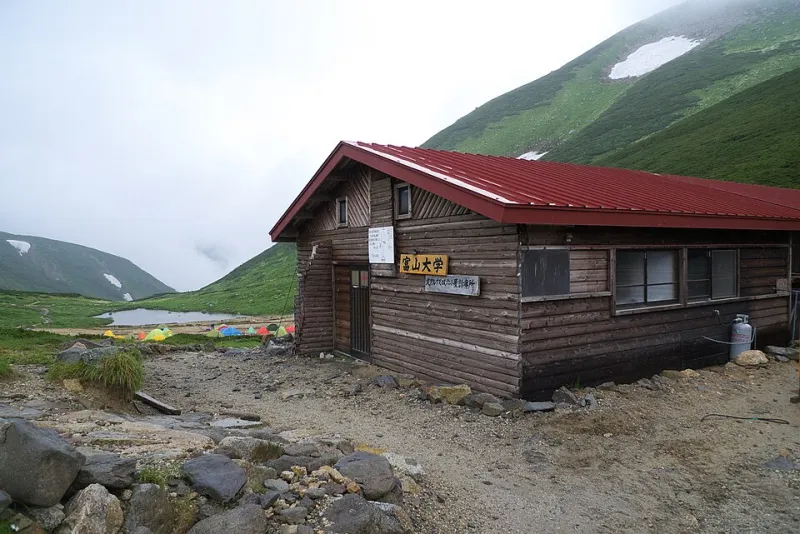
Photo: Yasu, CC BY-SA 3.0, via Wikimedia Commons
The first time an American hiker walks into a Japanese mountain hut, there's a recognizable half-second of confusion. They've booked "a hut," so they're expecting a shelter — a plywood box with a platform, a pit toilet, and a bear box. Instead they get a warm room, a hot meal, a tatami floor, and a hutmaster asking whether they'd like tea.
That gap is worth closing before you go, because the hut night is genuinely one of the best parts of a Kiso-Ontake trip. It's also the part where cultural translation matters most. Here's what to expect, what to bring, and how not to be that guest at 9,000 feet.
Not a shelter: how Japanese huts actually work
The basics: you reserve in advance, you get an assigned sleeping space, meals are usually included, and everything runs on a schedule set by the hut. There's no cooking, no camping nearby, and no wandering in at 9 p.m. hoping for a bunk. A hut here operates more like a small mountain inn than a public shelter.
Huts on the Ontake routes cluster around the mid and upper stations, with a few down near the trailheads. Specific operators, opening dates, and names shift year to year, so treat any list you find online — including this one — as a starting point and confirm with your lodging in Otaki.
Booking: expect a phone call, not a booking widget
Most huts take reservations by phone, in Japanese. Some work through regional hut associations or accommodation sites; many don't. This is the single step where Americans get stuck, and it's easily solved:
- Ask your Otaki inn or your hotel in Kiso-Fukushima to call on your behalf. This is completely normal and they do it often.
- Book a month or more ahead. Summer weekends and the autumn color window fill early.
- Confirm four things: date, number of people, whether meals are included, and whether bedding is provided or you need a sleeping bag.
Cash, and no card reader at altitude
Huts are cash. Bring it in small bills. Budget on the order of ¥9,000–13,000 per person with meals, and confirm the current rate when you book. There's no tipping culture, no card terminal, and no ATM — the next section of this guide covers the money side in more detail.
Dinner at 5:30, lights out at 8
The rhythm surprises people. You arrive mid-afternoon, check in, get shown your space, and eat early. Dinner is hearty and unfussy — curry, rice, something hot — and breakfast is either an early sit-down or a boxed meal handed to you before dawn. Hot water and tea are usually available; bottled drinks can often be purchased.
The schedule isn't hospitality theater. Staff have to feed everyone, clean up, and be ready for the 3:30 a.m. sunrise crowd. Follow it. If you're a slow eater or a late riser, adapt rather than negotiate.
Futon etiquette at 2,700 meters
Your space is assigned — a futon on tatami, sometimes in a shared room with a dozen other people. A few unspoken rules do a lot of work:
- Shoes come off at the entrance. Bring a clean pair of socks or use the hut slippers.
- Keep your gear inside your own footprint. Packs don't get to sprawl.
- Quiet hours start early and are taken seriously. Earplugs and an eye mask are the two best grams you'll carry.
- No outlets. Charge everything in the valley.
- Greet the staff and your roommates. A simple konbanwa on arrival and arigatou gozaimashita on departure goes a long way.
Sleeping at altitude is going to be weird
Huts here sit high, and sleeping at 2,700–3,000 meters is a different physical experience. You may wake up repeatedly. You may get a headache. Your breathing pattern will change. This is normal, and it isn't a sign you're in trouble — but it's a reason to arrive at the hut unhurried, drink more water than you think you need, and skip the whiskey.
If you're coming straight from sea level in the US, consider a night in Otaki or Kiso-Fukushima first. It won't fully acclimatize you, but it takes the edge off.
Curfew, and the 4 a.m. parade
Doors close in the evening. Night hiking isn't a thing here, and heading out alone in the dark will get you a polite but firm conversation. In the morning, the sunrise crowd is up and moving by 3:30 or 4, which means the room gets loud early no matter what time you planned to wake. Plan for it rather than resenting it.
Water, toilets, trash
Everything up here was carried up by truck or helicopter, and it's priced accordingly. Buy the water. Don't expect a tap. Toilets are typically free or coin-operated, often with a small contribution box — use it. And everything you bring up, including wrappers and used tissues, comes back down with you. No exceptions, no camp stoves, no fires.
What to pack for the hut night
- A light sleeping bag or liner if bedding isn't included (confirm when booking)
- Earplugs, eye mask
- Headlamp with a red mode
- Cash in ¥1,000 notes and coins
- Small towel, toothbrush, one warm layer to sleep in
- A water bottle you can refill or a plan to buy water
That's it. Luxury at a hut is weight you didn't bring.
The point of all this
Hut culture is the mountain's hospitality, not its obstacle course. Show up on time, follow the schedule, keep your voice down after dark, pay in cash, and say thank you. Do that, and you'll get something a shelter never gives you: dinner, a warm room, and a hutmaster who remembers you on your way back down.