Two Days, One Sacred Peak: The Weekend Warrior's Kiso-Ontake Blueprint
Photo: Carlosdfox, CC BY-SA 4.0, via Wikimedia Commons
Let's be honest about how most Americans travel to Japan. You've got ten vacation days, you're spending five of them in Tokyo and Kyoto, and the family group chat thinks you're insane for wanting to add a mountain. What you need isn't an expedition plan. You need a blueprint that treats your Saturday and Sunday like the finite resources they are.
Good news: Kiso-Ontake is one of the most weekend-compatible sacred mountains in Japan. Here's exactly how it's done.
Friday Night or Saturday Morning: Get Yourself to Otaki
Your target is Otaki village, on the Nagano side of the mountain. From Tokyo, take the shinkansen to Nagano, then a limited express or local line toward Kiso, then bus to Otaki — budget four to five hours total. Leave Tokyo by early afternoon and you'll roll into the village with daylight to spare.
Check into a minshuku or small ryokan. This is non-negotiable, even for the budget-minded: a home-cooked dinner, a futon, and a host who points you toward the shrine office's opening time is worth more than any trail magic. Eat the dinner. It's engineered for tomorrow.
Saturday, 7 P.M.: Handle Business at the Shrine Office
If the office is still open in the evening, stop by Otake Shrine to sort your climbing registration and ask about conditions. If not, plan to arrive at opening the next morning — which, conveniently, is how the timing works anyway. Either way, tonight you lay out your pack, check the morning forecast, and set the alarm.
That alarm: 4:30 a.m. Yes, really. Sacred mountains start early, and so do the buses.
Sunday, 5 A.M.: The Summit Push
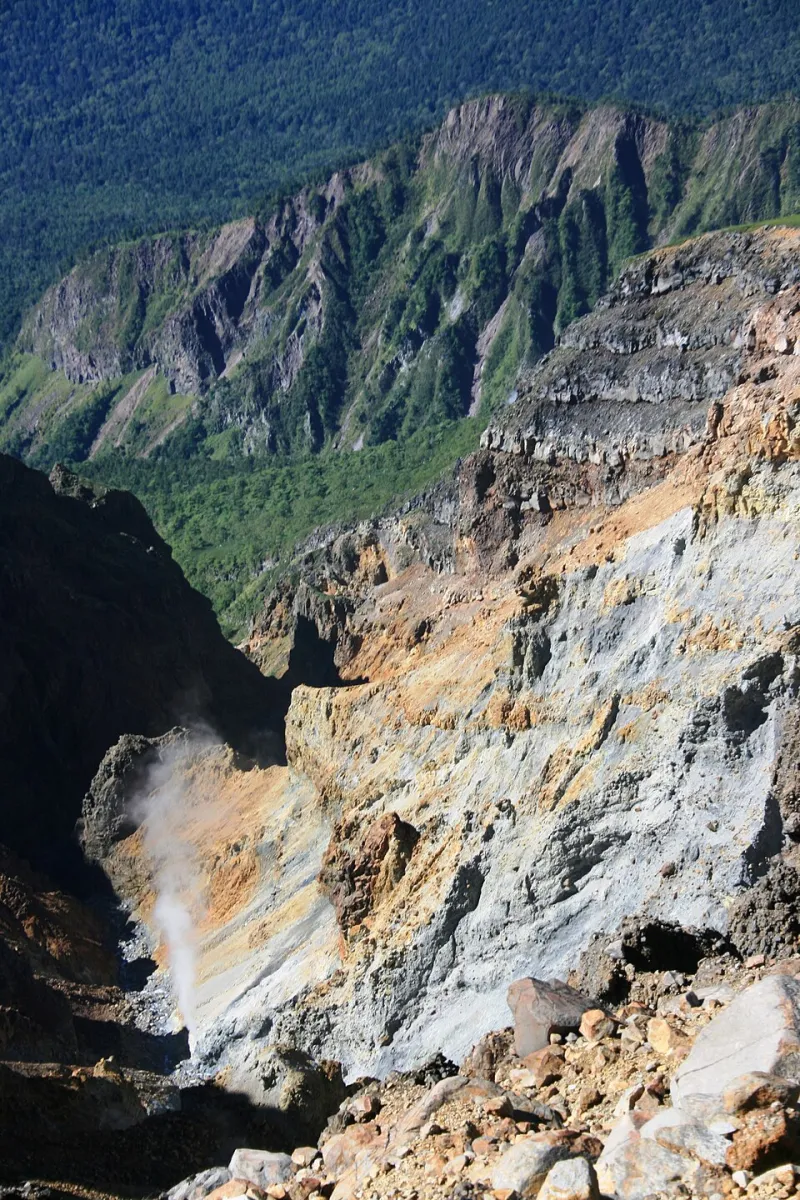
Catch the first bus or start walking from the trailhead as the sky turns gray-blue. The classic Otaki-side route climbs steadily through forest, past shrine gates that get progressively more atmospheric, before breaking into the open volcanic terrain near the top.
Expect four to six hours up depending on your pace and how often you stop — and you will stop, because the trailside shrines and stone markers demand it. Summit by late morning or early afternoon. The Kiso range spreads out below you, and on clear days you can pick out the Southern Alps. Say something at the summit shrine, even if it's just thanks. That's the whole tradition, distilled.
Sunday, 2 P.M.: Down and Into Hot Water
Descend the same route (two to three hours), and here's where the blueprint pays off: your legs will be jelly, and there is a hot spring waiting. Otaki and the surrounding Kiso Valley have onsen that cater to exactly this moment. Soak for forty-five minutes. Feel your quads file a formal apology.
Sunday, 6 P.M.: Eat Like You Earned It
A big post-hike dinner is the final act. Soba, grilled river fish, whatever the local spot is serving — this is not the night for convenience store sushi. If your bus or train back to Nagano runs in the evening, great. If not, one more ryokan night turns your 48 hours into a decadent 60, and nobody will judge you.
The Fine Print
- Build in a weather buffer. If Sunday looks bad, flip your days — climb Saturday, travel Sunday.
- Confirm bus schedules in advance. Rural Nagano transit runs on pilgrimage time, not Uber time.
- Cash. Small villages, small inns, small shrine offices. ATMs can be scarce.
- If your Japan trip routes through Nagoya instead of Tokyo, you're even closer — the Kiso Valley is practically next door.
Is this the slow-travel experience? No. Is it a real, respectful, unforgettable encounter with one of Japan's holiest peaks? Absolutely. Sometimes 48 hours is exactly enough.