Reading the Mountain's Breath: What Kiso-Ontake's Steam and Sulfur Are Actually Telling You
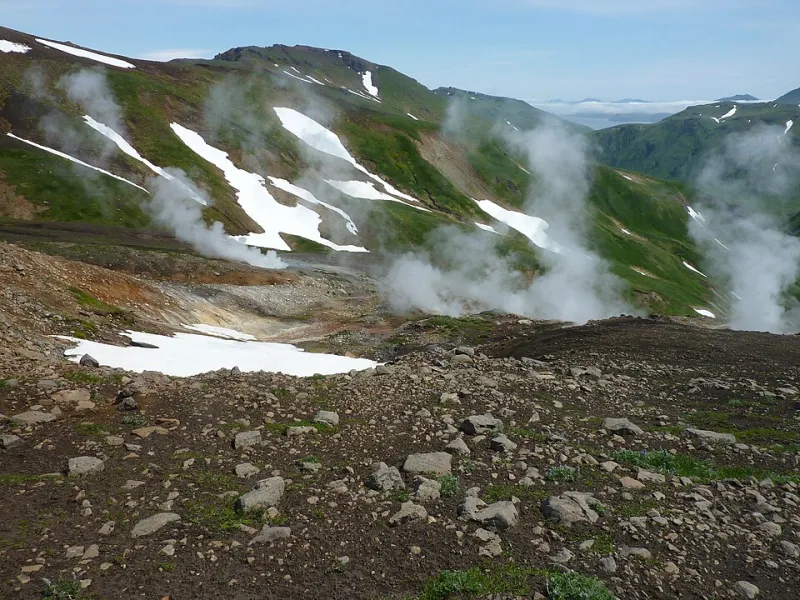
Photo: U.S. Geological Survey from Reston, VA, USA, Public domain, via Wikimedia Commons
Most American hikers cut their teeth on old, quiet mountains. The Appalachians haven't erupted in ages. Mount Rainier is technically active, but most of us summit it thinking about glissading, not gas emissions. So when you tell folks back home you're climbing a volcano in Japan — one that last woke up in 1984 — you get the raised eyebrows.
Here's the thing: Kiso-Ontake being alive is not a bug. It's the feature. The sacred status of this mountain, the shrine at its base, the rituals that have continued for centuries — all of it flows from the fact that this peak breathes. Your job as a visitor isn't to ignore that. It's to learn to read it.
First, Check the Official Word
Japan doesn't leave you guessing about volcanic activity. The Japan Meteorological Agency (JMA) maintains a five-level alert system for every monitored volcano, and unlike the vague color-coded stuff you might see stateside, these levels come with actual instructions:
- Level 1 (Live Volcano): The mountain is active but quiet. Normal hiking, normal precautions.
- Level 2 (Do Not Approach the Crater): Trails near the summit vents close, lower routes may stay open.
- Level 3 (Do Not Approach the Mountain): Time to pick a different adventure.
- Levels 4 and 5: Evacuation territory. You won't be hiking.
Before your trip, search for the JMA's volcanic warnings page — it has an English version — and check the current level for Ontakesan. Also check the Otaki village tourism site, which posts trail status in plainer language. Most of the time you'll find Level 1 or 2, which for most routes means: go, but stay aware.
What You'll Actually See (and Smell) on the Trail
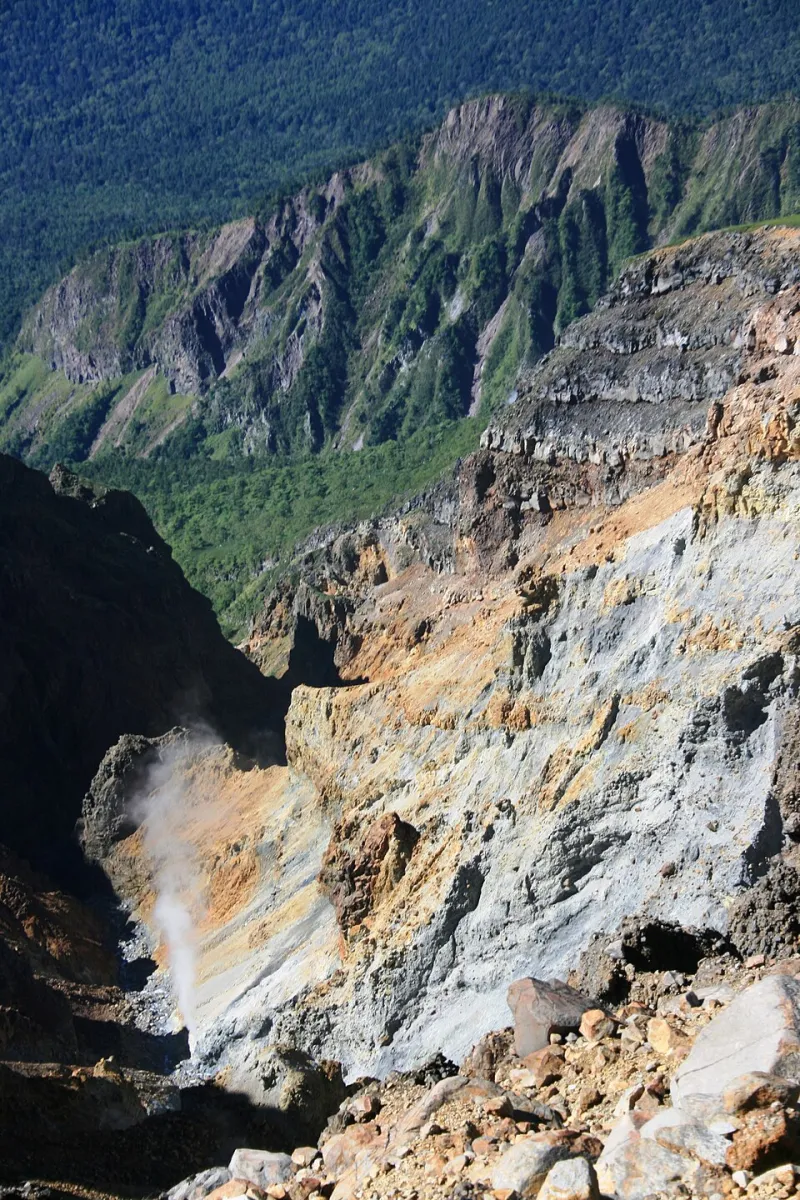
Level 1 doesn't mean the mountain looks like Pikes Peak. Kiso-Ontake steams. Fumaroles — vents where volcanic gases escape — dot the upper slopes, and you'll pass them on the way to the summit shrines.
A few field notes:
- That rotten-egg smell is hydrogen sulfide. It's normal near vents. A whiff as you pass is fine; a thick, choking concentration means move away and downhill. Don't linger to take a photo with your face in the plume.
- Yellow-stained rocks around vents are sulfur deposits. Pretty, otherworldly, and a good reminder not to wander off-trail up high.
- Steam rising from the ground on a cold morning is the mountain exhaling. It's most dramatic in spring and fall when air temps contrast with the warm ground.
- New cracks, unusually hot ground, or vegetation dying off in patches are worth noting and reporting at the trailhead or shrine office. Rangers genuinely want this info.
None of this is cause for alarm. It's context. The same forces that heat the onsen you'll soak in after your descent are the ones hissing beside the trail.
Why the Locals Never Saw This as a Reason to Stay Away
Here's where American instincts and Japanese mountain tradition diverge. In the Shinto view, a volatile mountain isn't a hazard to be managed — it's a kami, a deity, demonstrably present. The steam vents aren't evidence of danger. They're evidence of divinity. Pilgrims have climbed past these fumaroles for hundreds of years precisely because the mountain is obviously, tangibly alive.
You don't have to convert to the theology to appreciate the logic. When you stand near a vent and feel the ground humming with heat from somewhere deep, the idea that this is a sacred place stops sounding like folklore and starts sounding like the only honest description available.
Practical Rules for a Respectful Ascent
- Check the JMA level the night before and morning of your hike. Conditions can change, and closure notices get posted at trailheads too.
- Stay on marked routes above the tree line. Off-trail wandering near vents is how people get hurt, not the volcano itself.
- Carry a working phone and know that summit areas may have patchy coverage. Tell someone your plan — standard practice anywhere, extra relevant here.
- If a trail section is roped off, that's not a suggestion. Closure zones around active vents are drawn precisely.
- If you ever hear rumbling or notice sudden changes in steam output, descend promptly and alert officials. This is vanishingly rare, but knowing the drill beats improvising it.
The Takeaway
You wouldn't skip Yellowstone because the geysers are geysers. Approach Kiso-Ontake the same way — with a little education, a little humility, and an appreciation that you're walking on something that doesn't owe you stillness. The steam is the mountain saying hello. Learn the language, and the whole climb changes.