Where the Gods Live: My First Ascent of Mount Kiso-Ontake
Somewhere around the third hour of climbing, my legs screaming and my water bottle half empty, I passed a weathered stone marker covered in tiny carved characters. My hiking companion — a retired schoolteacher from the nearby town of Otaki — gave it a small bow before continuing up the trail. I didn't understand it at the time. By the end of that day, I did.
Mount Kiso-Ontake isn't just a peak. At 3,067 meters, it's one of Japan's famous 3,000-meter mountains, sure, but more importantly, it's been an object of worship for centuries. Pilgrims have been climbing this mountain long before anyone thought of it as "hiking." If you're an American traveler used to trailheads with parking meters and summit registers, Kiso-Ontake will feel different — and that difference is exactly why it's worth the trip.
Why This Mountain Hits Different
Let's get the practical stuff out of the way first: Kiso-Ontake straddles Nagano and Gifu prefectures in the heart of the Japanese Alps region. Unlike its flashier neighbors — the jagged, dramatic spires of Yatsugatake or the iconic cone of Fuji — Ontake is a massive, gently rounded volcanic dome. That shape matters for climbers because it means long, steady, relentless ascents rather than technical scrambling.
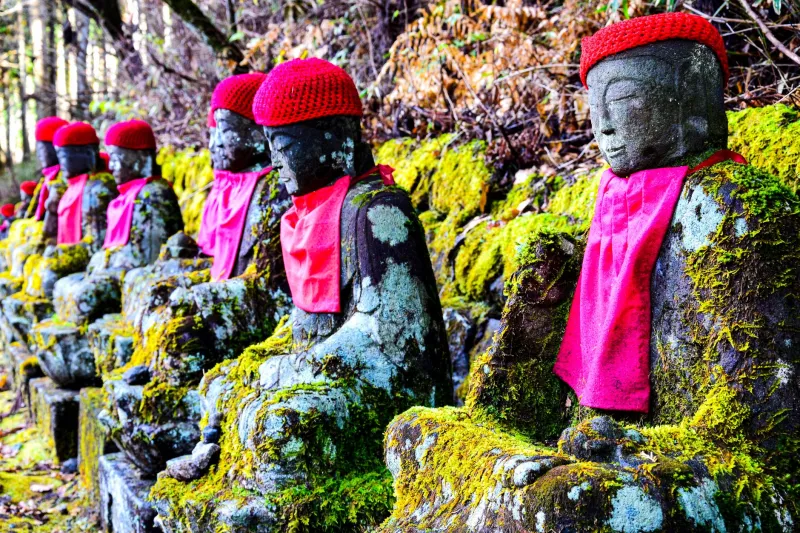
It also matters culturally. That smooth profile made the mountain visible and approachable from villages for miles around, and it's been a sacred site for Shinto practitioners and mountain ascetics (called yamabushi) since at least the Edo period. Small shrines dot the slopes. Stone statues of the deity Zaō Gongen line the trails. When you climb Kiso-Ontake, you're walking a path that pilgrims have worn smooth over hundreds of years.
When to Go
The climbing season is short and sweet: late June through early October. Outside that window, snow and ice make the upper slopes genuinely dangerous without winter mountaineering experience and gear.
- July: Wildflowers explode across the high meadows, and the weather is generally stable. Expect more crowds on weekends.
- August: Peak season. Warm, busy, and lively — this is when many Japanese pilgrims and hikers make their climbs.
- September–early October: My personal pick. Cooler temps, thinner crowds, and the first hints of autumn color in the birch zones. Just watch the forecast; typhoons can still roll through in September.
Whatever you choose, start early. Afternoon thunderstorms are a real thing on Japanese mountains in summer, and you do not want to be above the treeline when one rolls in.
The Kurosuke Trailhead Route
For first-timers, the classic approach is from the Kurosuke Trailhead (Kurosuke-goya) on the Gifu side. Here's the honest breakdown:
The basics: Roughly 6–8 hours up, 4–5 hours down, depending on your pace. The trail gains around 1,500 meters, so this is a serious day — comparable to a long, steep day in the Colorado Rockies or the White Mountains, not a stroll.
The route in three acts:
-
The forest climb (hours 1–3): The trail starts gently through beautiful conifer and birch forest, then steepens. Wooden steps and root ladders appear — Japanese trails love their ladders. Your quads will notice.
-
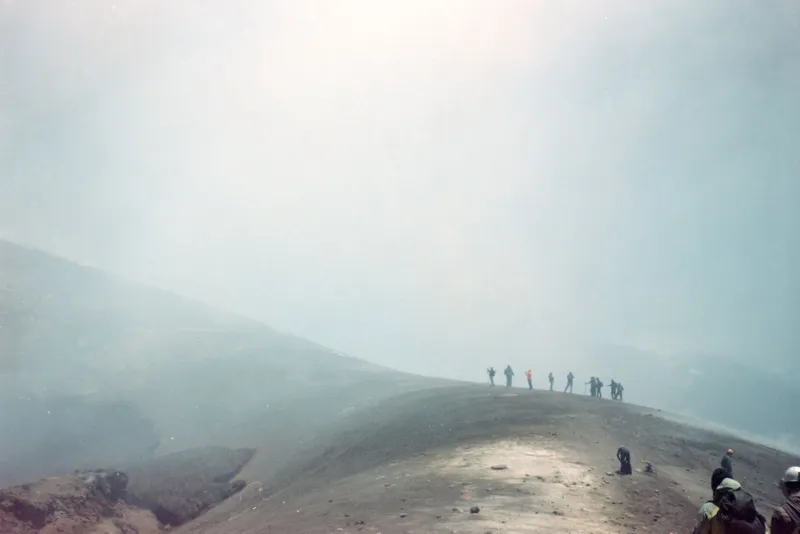
The volcanic zone (hours 3–6): Once you break the treeline, the landscape transforms into something almost lunar — volcanic gravel, steaming vents, and strange sulfur-stained rocks. You'll pass the Ninoike and Gonoike crater ponds, small jewel-colored lakes that feel wildly out of place at this altitude. This is also where you'll start noticing the small shrines and stone markers. Take a moment at them. That's part of the experience.
-
The summit push (final hour): A steady grind up loose volcanic gravel to the summit complex, where you'll find the Ontake Shrine's summit sanctuary, a weather station, and — if the weather cooperates — views that stretch across the entire Japanese Alps on clear days.
Mountain huts along the way offer basic lodging and food if you'd rather split the climb over two days. Booking ahead is essential in summer.
Gear Tips from Someone Who Learned the Hard Way
- Layers, layers, layers. The summit can be 20 degrees colder than the trailhead. I watched a guy in shorts shivering violently at the top in July.
- Bring more water than you think you need. There's no reliable water on the upper mountain.
- Cash for the huts. Japan is still surprisingly cash-forward in the mountains.
- Trekking poles. The long gravel descents will thank you.
- A small offering or coin. If you stop at the shrines — and you should — a modest offering and a bow is a respectful gesture that locals genuinely appreciate.
More Than a Summit
Here's what I wish someone had told me before my first climb: don't rush. The American instinct is to push hard, bag the peak, get the photo. But Kiso-Ontake rewards a slower pace. Watch how Japanese hikers greet the shrines. Listen for the sound of conch shells — some pilgrims still blow them on the summit. Stop at the crater ponds.
The mountain has been climbed as an act of devotion for centuries. You don't have to share the faith to feel it. Climb it once, and you'll understand why people keep coming back.