Nine A.M. Is the New Alpine Start: Rethinking the Early Rise on Kiso-Ontake
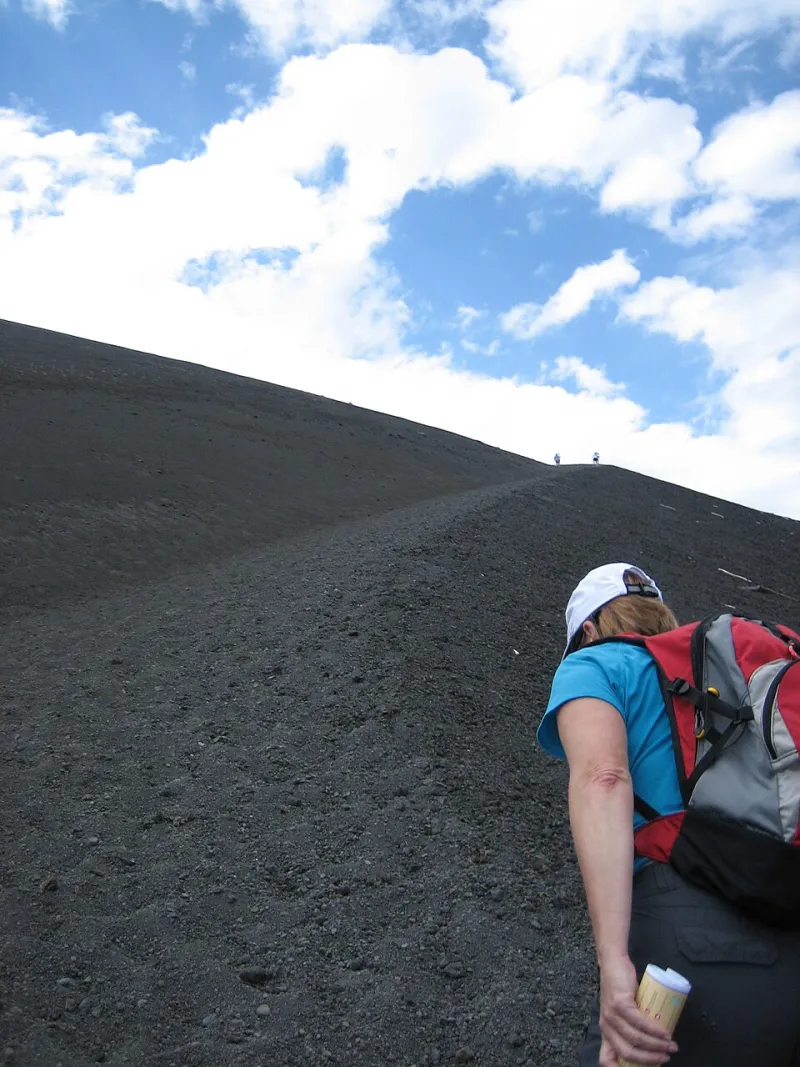
Photo: LassenNPS, Public domain, via Wikimedia Commons
If you came up through American hiking culture, the 4 a.m. alarm is close to a sacrament. Headlamps on in the trailhead lot, summit by sunrise, back at the car before the afternoon clouds stack up. It's a habit born in the Rockies and the Sierra, where afternoon thunderstorms and desert heat make an early start a genuine safety tool rather than a personality trait.
Kiso-Ontake is not one of those places — or at least, not in the way you'd guess. After several seasons of watching fit Americans sprint out of the trailhead at dawn and then kill three hours in the bus shelter at Kiso-Fukushima station, I've landed on a mildly heretical position: on this mountain, 9 a.m. is often the smarter start.
Often, not always. Here's the case, with the caveats firmly attached.
Where the 4 a.m. gospel actually comes from
Every piece of early-start advice you've absorbed was calibrated to a specific mountain range. Whitney's permit queue. Colorado's 2 p.m. lightning. Zion's exposed slickrock in August. Grand Canyon rim-to-rim heat. Those rules are real, and they're written in other people's trail register entries.
A 3,067-meter Japanese volcano with a staffed hut system, a village at its foot, and a bus schedule running up its access road is a different operating environment. Importing the rules wholesale means you're solving for problems the mountain didn't hand you, and ignoring the ones it did.
What Kiso-Ontake is doing while you're asleep
In summer, the first thing the mountain does is sit in fog. The Kiso Valley fills with it overnight, and the lower forest stays damp and gray until mid-morning. Starting at 5 a.m. in that soup buys you a headlamp hike through cloud you can't see anything in — beautiful in its own way, but not the sunrise photographs you flew across the Pacific for.
The second thing it does is build cumulus over the summit ridge in the afternoon. That's the real constraint, and it's why the early-start crowd isn't wrong to be cautious. But "be off the ridge by mid-afternoon" is a turnaround-time rule, not a start-time rule. There's a big difference between the two, and it's the difference between an 8 p.m. bedtime and something resembling a vacation.
The bus is the actual trail boss
Here's the practical detail that dissolves most of the argument: you probably aren't driving to the trailhead at 4 a.m. anyhow. Seasonal buses run from Kiso-Fukushima up toward the Ontake trailheads, and the first departure of the day puts you at the trailhead mid-morning regardless of when your alarm went off. Unless you're sleeping in Otaki and driving yourself up, the dawn start is mostly a theory.
So build the day around the bus instead of around the clock. Check the current timetable when you book your lodging — service is seasonal and changes — then plan backward. That single habit fixes more Kiso-Ontake itineraries than any gear upgrade.
The shrine-town morning you'd be skipping
A 9 a.m. start means you get something the dawn patrol never does: an actual morning in Otaki. Breakfast at your inn. A quiet stop at the shrine office before the day's pilgrims arrive. A last look at the torii with mist still on it. The village isn't a parking lot with a trail attached — it's the reason the mountain is what it is. Rushing past it to save forty minutes of daylight is a bad trade.
An hour-by-hour plan for the 9 a.m. start
- 6:30 — Breakfast. Eat properly. Altitude is unkind to people running on a convenience-store rice ball.
- 7:15 — Shrine office or a short walk through Otaki. Buy a charm, get your book stamped, ask about current trail conditions.
- 8:00 — Bus or car to the trailhead.
- 8:45 — Boots on, water filled, coins ready for the toilet, pack check.
- 9:00 — Start walking.
- 11:00–11:30 — Break at a hut or station. Eat something. Drink more than feels necessary.
- 12:30 — Above treeline. This is where you commit or turn, based on sky and wind.
- 13:30–14:00 — High point. Twenty minutes, photos, layer up.
- 14:00 — Descend. No lingering, no "just one more ridge."
- 16:30–17:00 — Back at the trailhead. Onsen within the hour.
Roughly 1,400 meters of gain on the main route, six to seven hours round trip for a moderately fit hiker, and you're down with daylight to spare. Note that summit-area access has shifted over the years and can be restricted without much warning — confirm the current situation with the village or your inn before you count on any high point.
When the early start still wins
Be honest with yourself about the exceptions:
- Long approaches. If you're coming up the quiet side of the mountain with big mileage, the arithmetic changes fast.
- Peak autumn color weekends. Late September into October, the trailhead lots fill early and the buses fill earlier.
- Mid-summer storm patterns. In July and August, when the cumulus gets aggressive, an extra hour of buffer is worth real money.
- Sunrise from the hut. If the whole point is alpenglow from a futon-adjacent window, then yes — be up at 4. That's a different trip, and a great one.
The only thing you actually give up
Empty trails. A 9 a.m. start means sharing the mountain, especially on the popular routes in high season. What you gain is a functioning body at altitude, a real breakfast, a village morning, and enough sleep that you're not making decisions through a fog of jet lag on a volcanic ridge.
Pick a hard turnaround time and honor it. Then let yourself start at a human hour. The mountain has been doing this for a very long time, and it isn't impressed by your alarm clock.