Nervous About Your First Japan Hike? Start Here, Not Fuji
Most American hikers who dream about climbing in Japan picture one thing: Fuji. Crowded switchbacks, pre-dawn summit pushes, and a volcano so famous it barely feels like an adventure anymore. Meanwhile, the Northern Alps — the jagged spine running through Nagano and Gifu — look incredible on Instagram but demand chains, helmets, and a comfort level with exposure that most first-time visitors simply don't have yet.
There's a third option, and it's the one we'd point any first-timer toward: Mount Kiso-Ontake. At 3,067 meters (about 10,065 feet), it's the second-highest peak in western Japan and one of the country's one hundred famous mountains. But unlike Fuji, you won't be sharing the trail with a small city. And unlike the Northern Alps, you won't be scrambling up ladders bolted to cliffs. It's a real, high-altitude, spiritually significant mountain — that just happens to be remarkably forgiving.
Why Kiso-Ontake Works as a First Japanese Summit
Think about what actually makes a mountain approachable for a beginner. Not the summit height alone — the whole experience surrounding it. Kiso-Ontake checks the boxes that matter:
The trail is straightforward. The classic route from Kurosawa starts at a trailhead reachable by bus, climbs steadily through forest, and follows a well-marked path past shrines and small ponds to the summit plateau. There's no technical climbing required. If you can hike a steep day in Colorado or the White Mountains, you can do this.
The hut system removes the pressure. American hikers are used to an all-or-nothing calculus: summit in a day or go home. In Japan, mountain huts (yamagoya) dot the route, letting you split the climb into two comfortable days. You sleep on the mountain, wake up for a short summit push, and descend with fresh legs. No 3 a.m. alarm, no headlamp death march.
The scale is human. Fuji's base is enormous; you can walk for hours and still be on the mountain's lower slopes. Kiso-Ontake's trailheads sit high enough that the meaningful climbing starts quickly. You get the altitude, the alpine views, and the sense of accomplishment without committing your entire week to a single hike.
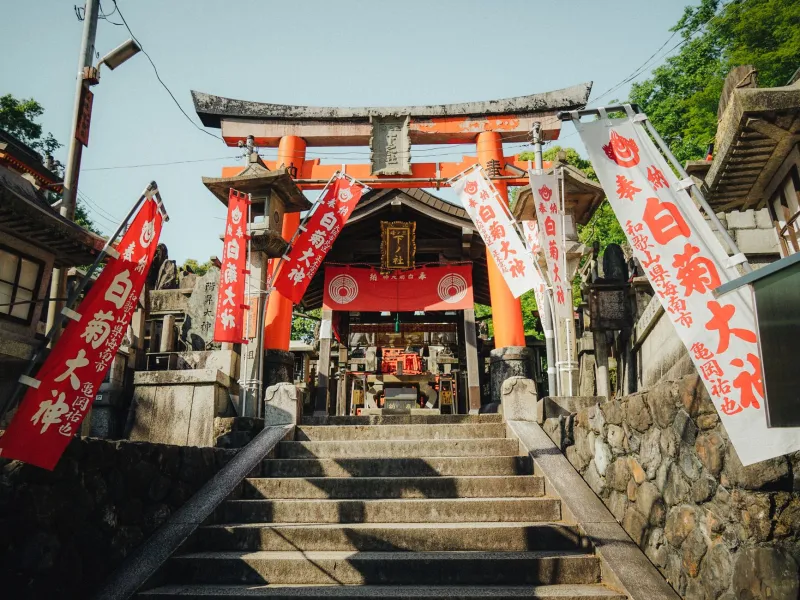
The culture does half the work. This is an active sacred mountain, dotted with Otake Shrine structures and stone markers left by centuries of pilgrims. When you're pausing at a shrine to catch your breath, you're also soaking in 600 years of mountain worship. The climb becomes a cultural experience, not just a workout.
The Confidence-Building Sequence, Step by Step
Here's how we'd structure a first Japanese climb, from the moment you're sitting at your kitchen table in the States to the moment you're standing on the summit crater.
Step 1: Book the hut before anything else. Japanese mountain huts fill up, especially on weekends. Once you pick your dates, reserve your spot at a hut like the Kiso-Ontake Goyojo or one of the smaller shelters near the summit. Hut reservations anchor your whole trip. If you can't reach the hut office by phone, your guesthouse in the Kiso Valley can usually help — or ask at the Otake Shrine office at Ohtaki, which handles pilgrimage logistics.
Step 2: Sleep low, acclimatize, go up slow. Fly into Nagoya or Tokyo, take trains to the Kiso Valley, and spend a night in a valley town like Kiso-Fukushima or Agematsu. You'll be at low elevation, eating excellent soba, and resting. The next morning, bus or taxi to the trailhead and hike to your hut. That night on the mountain is your altitude adjustment — most first-timers handle 3,000 meters fine after a split climb like this.
Step 3: Keep your pack minimal. You don't need expedition gear. Layers, rain shell, decent boots, a headlamp, and a couple of liters of water. Huts sell food and water, and many offer futons and meals. This isn't the Sierra Nevada — you're not carrying a bear canister or a four-day resupply.
Step 4: Learn five Japanese words. That's genuinely all you need to start: konnichiwa (hello), arigatou (thank you), sumimasen (excuse me/sorry), o-negai shimasu (please), and yoroshiku onegaishimasu (a polite all-purpose phrase). Add ganbarimasu (I'll do my best) for the trail. Japanese hikers will greet you, and greeting back earns instant goodwill.
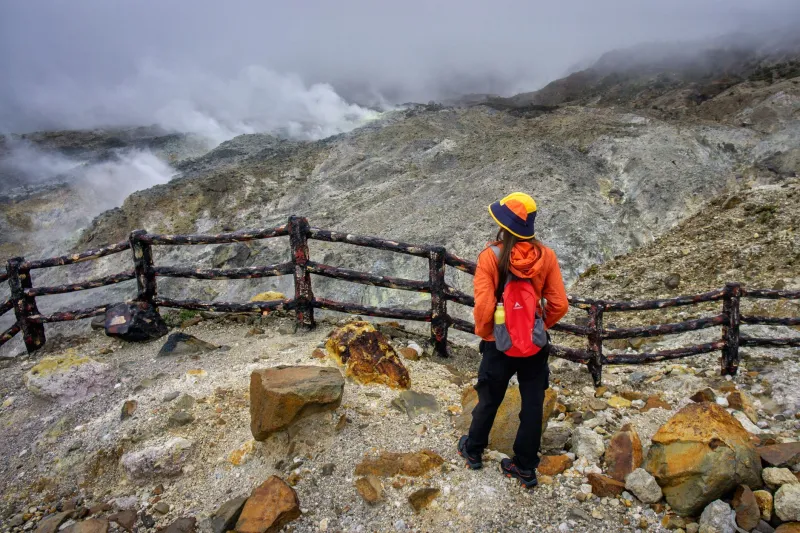
Step 5: Time the summit for morning. Leave the hut early enough to reach the top by mid-morning, before afternoon clouds roll in — a pattern as reliable in the Japanese Alps as thunderheads in the Rockies. The summit area is a moonscape of volcanic rock dotted with tiny shrines and crater ponds, and on a clear day you'll see the Northern Alps stretching north and Fuji itself floating on the southern horizon.
What Makes It Feel Different From an American Hike
A few things will surprise you, in good ways. The trail will be quieter than any comparable US peak. You'll pass pilgrims in white jackets — yes, actual religious pilgrims — who've been climbing this mountain for generations. You'll bow slightly at the shrine gates without quite knowing why, and it'll feel right anyway. And when you reach the top, you'll realize the mountain was never just a mountain. It's been a destination for worship since long before anyone thought of it as recreation.
That's the thing about Kiso-Ontake: it forgives beginners for their inexperience, their rusty Japanese, their slightly-too-heavy packs. The trail is kind, the infrastructure is solid, and the mountain itself seems to meet you where you are. For a first Japanese summit, that's exactly what you want.
Start here. The harder, more dramatic peaks of the Northern Alps will still be waiting when you're ready — and after Kiso-Ontake, you'll be more ready than you think.