What Actually Goes in the Pack: Gear Notes for a Sacred Volcano Climb
Ask anyone who's climbed Mount Kiso-Ontake and they'll tell you the same thing: the mountain isn't technically hard, but it punishes bad preparation. At 3,067 meters, the second-highest peak in Nagano Prefecture sits high enough that summer can feel like October and October can feel like January. You'll want to pack with intention.
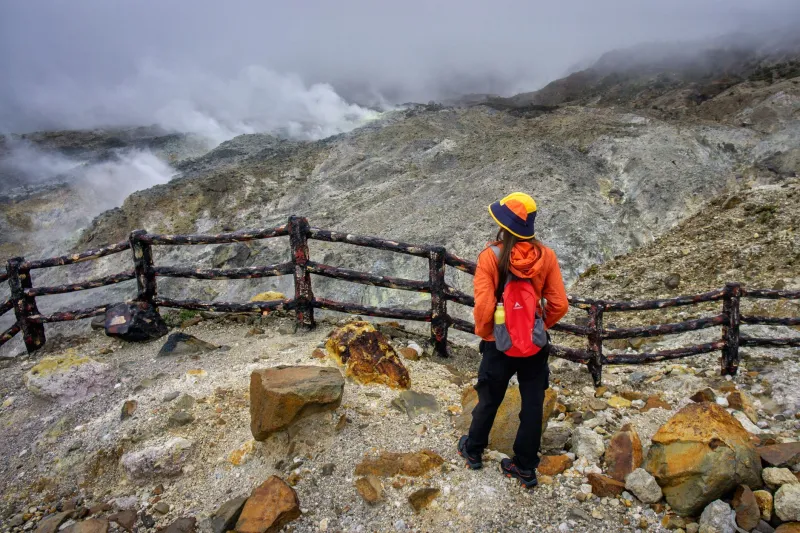
This isn't a gear list for Everest. It's a list for a long day — or a long two days — on a rocky, sacred volcano where the trail starts in beech forest and ends somewhere that feels a lot like the surface of the moon.
The Layering Problem Nobody Warns You About
The trailhead at Kuzotsu sits around 1,600 meters. The summit sits 1,400 meters higher. That's a full climate zone change, and on Kiso-Ontake the weather can swing from T-shirt sunshine to sideways sleet in under an hour. Locals have a saying about the mountain's mood swings — take them seriously.
The fix is a simple three-layer system:
- Base layer: Merino wool, not cotton. Cotton kills warmth when you sweat on the climb and shiver above treeline.
- Mid layer: A light fleece or packable puffy. You'll be hauling it out at every rest stop.
- Shell: A real rain jacket, not a windbreaker. Afternoon thunderstorms build fast over the Kiso range in summer.
Throw in a beanie and lightweight gloves even in July. American hikers used to Sierra Nevada summer conditions routinely underestimate a Japanese summit at 3,000 meters. Don't be that person.
Boots, Sandals, and a Strange Tradition
Here's something you'll notice at the trailhead: some Japanese pilgrims climb in sandals. Not sport sandals from a mall — proper heavy-duty climbing sandals, often paired with white split-toe tabi socks. It's part of the shugendō tradition that shaped worship on this mountain for centuries. Ascetic practitioners considered suffering part of the practice.
You don't have to follow suit. For most American hikers, a broken-in pair of mid-weight hiking boots with solid ankle support is the right call. The upper sections of the mountain are a jumble of volcanic rock and stone steps, and the descent will hammer your knees if your footwear is soft. Trail runners work in dry summer conditions if that's what you're used to, but bring them with grip — wet volcanic rock is slick as grease.
Whatever you wear, break it in before the trip. There's no gear shop at 2,500 meters.
What Goes in the Pack
Keep it lean. A heavy pack on a 1,400-meter gain is misery. Here's the core loadout:
- Daypack (20–30L) with a rain cover
- 2 liters of water minimum — there's no reliable water source on the upper mountain
- High-calorie snacks; onigiri from a Kiso Valley convenience store counts as cuisine
- Headlamp, even for a day hike. Late starts happen. So do delays.
- First-aid basics including blister care and something for headaches (altitude is real here)
- Trekking poles — your knees will send a thank-you note on the way down
- Cash, in small bills and coins. This matters more than you think.
- A trash bag. Japanese mountains operate on a pack-in, pack-out ethic with almost no garbage cans.
- Toilet paper and a small ziplock. Same ethic.
The Offering: Pack Light, Pray Hard
Kiso-Ontake is one of Japan's most important sacred mountains, and its summit shrine — Omiyame Shrine — has drawn pilgrims since the Edo period. You'll pass stone markers, tiny shrines, and stacks of offering stones all the way up. Participation is welcome, and it costs almost nothing in pack weight.
Traditionally, climbers carry coins to leave at small shrines along the route, or a sake cup (guinomi) to offer at the summit. Some pilgrims bring a small flask of sake itself and pour a splash as an offering. You can buy simple offering sets in the town of Ohtaki before your climb. A handful of five-yen coins — the word for five yen, go-en, puns on "good fortune" — weighs a few grams and earns you genuine goodwill with the mountain's caretakers.
Don't leave food, don't stack random rocks, and don't leave trash disguised as offerings. Small, traditional, light. That's the whole philosophy.
If You're Staying on the Mountain
Many climbers split the route with a night in a yamagoya, one of the small mountain huts below the summit. Hut packing deserves its own list:
- A compact sleep sheet or liner (blankets provided, sheets often not)
- Earplugs. Snoring in a shared hut is a universal constant.
- Cash for your stay — no cards, no exceptions
- A change of dry socks and shirt for the evening
- A headlamp with a red-light mode if you're courteous; hut lights go out early
Reservations matter in peak season, and hut meals are simple but hearty. Bring your own snacks for the summit push at dawn — and you do want the dawn. Sunrise from Kiso-Ontake's summit, looking across at the Northern Alps, is the payoff for every item on this list.
One Last Thing
The single most useful piece of gear costs nothing: a printed or downloaded map with the Japanese names of key points. Cell coverage fades above treeline, and if you need to ask for help, pointing at 御嶽山 beats miming. Combine that with the layers, the coins, and the broken-in boots, and you're ready for one of Japan's most rewarding — and most underrated — climbs.