Two Weeks, One Ridge: How to Catch Kiso-Ontake's Snow Dragon Before It Melts
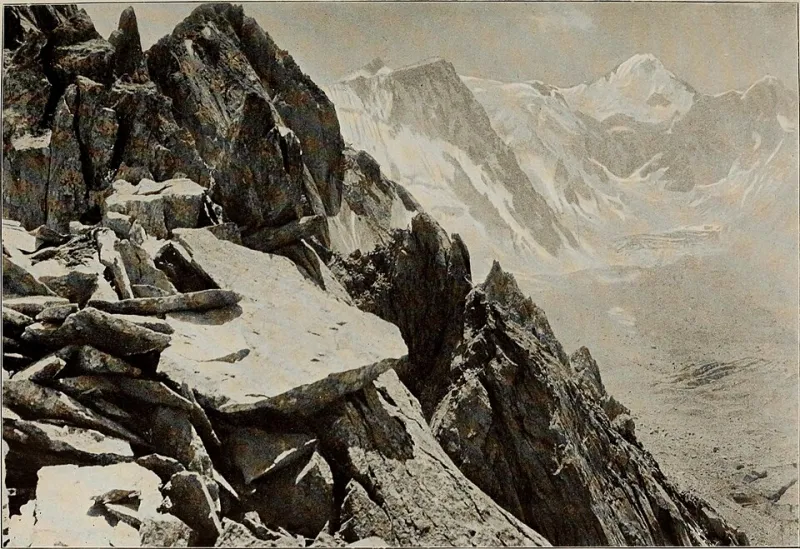
Photo: Internet Archive Book Images, No restrictions, via Wikimedia Commons
Some mountains you can visit anytime. Mount Kiso-Ontake keeps one of its best performances on a two-week schedule.
Ask around the Kiso Valley in early spring and you'll hear about miyojin-tai — the snow formation that clings to the mountain's summit ridge like a spine, a jagged white crest running along the volcanic cone. Locals call it the dragon's back. From certain angles in the valley below, it looks less like snow and more like something the mountain grew overnight.
If you're a hiker or a photographer used to planning trips months out, this is going to require a different mindset. Miyojin-tai doesn't take reservations.
What You're Actually Looking At
Kiso-Ontake is an old stratovolcano on the border of Nagano and Gifu prefectures, and its summit ridge — dotted with shrines, stone circles, and sacred pillars — runs roughly east to west. In winter, heavy snowfall buries the ridge. When spring sun starts working on the snowpack, wind and melt carve the remaining snow into a narrow, serrated crest that traces the ridgeline like a mohawk.
From below, especially from the Otaki side, the effect is dramatic: a single white blade against the sky, sharp enough that it reads almost architectural. It's the kind of thing that makes you pull over on a mountain road and just stare.
The window is brutally short. The ridge typically shapes up in late April to early May, once enough snow has melted to reveal the crest but before warm weather erases it entirely. In a warm year, it might last ten days. In a cold snap, it can linger into mid-May. Some years, heavy late snowfall reshapes it entirely.
Why Americans Keep Missing It
Here's the honest problem for US travelers: most of us plan a Japan trip around flights booked in January and hotels locked in February. Miyojin-tai rewards the opposite approach — a flexible window, a weather app, and a willingness to commit on short notice.
A few things help:
- Follow Japanese mountain photographers on X (Twitter) and Instagram. Search terms like 御神体やね (miyojin-tai) plus 木曽御嶽山. When the ridge forms, local shooters post within hours.
- Check the Kiso-Fukushima and Otaki area weather rather than Nagano City forecasts. The mountain makes its own weather, and spring conditions in the valley don't tell you much about the ridge.
- Time it with Golden Week at your own risk. Early May is Japan's busiest travel week — the ridge is often at its best, but lodging in Otaki and Kiso-Fukushima books out far in advance.
If you can build flexibility into your itinerary — a rental car, a loose return date — you've already done most of the work.
Seeing It Without Summiting
Here's the good news for anyone not up for a full spring ascent, which involves lingering snowpack, crampons, and real avalanche awareness: miyojin-tai is a view, not a destination.
The best vantage points are all down low:
- The Otaki side roads above the shrine village offer classic angles of the cone and ridge, especially in morning light.
- Kiso-Fukushima and the upper Kiso Valley give you a distant, layered view — the ridge rising over larch forest just starting to green.
- The Mitake Daira area and lower trails, once snow-free, put you close enough for telephoto work without touching the snow line.
Spring summit attempts on Kiso-Ontake are a serious mountaineering proposition, not a casual hike. If the ridge is your goal, respect the line between photographing the mountain and climbing it before conditions allow. The mountain worship tradition here — the whole reason those shrines exist up top — is built on exactly that kind of restraint.
Mono no Aware, in Snow Form
There's a Japanese concept worth knowing before you go: mono no aware, the gentle ache of things being temporary. Cherry blossoms get all the attention from foreign visitors, but the idea runs deeper than sakura. It's the awareness that beauty and impermanence are the same thing.
Miyojin-tai might be the best illustration of it I've encountered on a mountain. You can't bookmark it. You can't guarantee it. You show up, you wait, and if the light and the melt cooperate, you get maybe a morning with it. Then it's gone until next year.
That's also why locals talk about it with a kind of pride — it's theirs precisely because it can't be scheduled, packaged, or sold. In a country that has perfected the art of the four-seasons itinerary, this is one phenomenon that still runs on the mountain's clock, not ours.
A Practical Game Plan
If I were flying from the US to chase this, here's how I'd structure it:
- Book flights into Nagoya or Tokyo with a 7–10 day flexible window in late April.
- Reserve refundable lodging in Kiso-Fukushima or Otaki for the back half of the window.
- Watch the forecasts and social feeds daily once you land. Ridge reports travel fast in the local hiking community.
- Have a plan B. The Kiso Valley is stacked with alternatives — the Nakasendo post towns, onsen towns, lower trails — so a miss isn't a wasted trip.
And if you do catch it? Take your photos, then put the camera down for a minute. The dragon's back will be gone in a week. That's the whole point.