Three Ways Up One Sacred Volcano: Matching Your Fitness to the Right Kiso-Ontake Approach
Here's a mistake Americans make constantly in Japan: they pick the famous route because it's famous, then spend 14 miserable hours discovering it was never the right fit. Mount Kiso-Ontake doesn't have one way up — it has three distinct personalities, and choosing wrong is the difference between a life-changing climb and a day you describe to coworkers as 'long.'
Let's fix that before you book anything.
The Lay of the Land
Kiso-Ontake tops out at 3,067 meters (about 10,065 feet), and every route starts low, often from the shrine villages at the mountain's base. That's a bigger day than most Coloradans expect from a 'medium' peak — think of it as hiking from the bottom of a Sierra 14er, not from a parking lot at treeline.
The three main approaches break down like this:
- Kuzo Route — the classic pilgrim path, steep and direct
- Hirokawa Route — the gentler, longer approach from the west
- The Ladder Routes (Nyonindo side) — exposed, chains-and-ladders terrain for experienced hikers only
Kuzo: The Pilgrim's Grind
The Kuzo Route is the historical approach — the one pilgrims have used for centuries, passing through Otake Shrine territory before the real climbing starts. It's steep. Relentlessly so. You'll gain most of your elevation in a compressed push through forest before the trees give way to the volcanic zone.
Difficulty: Strenuous. If your training regimen is 'weekend walks,' this isn't your trail.
Time: 6–8 hours up for most fit hikers, 4–5 down.
Exposure: Minimal. It's a steady grind, not a scramble.
Best for: Hikers with solid base fitness who want the authentic pilgrimage experience and don't mind earning every switchback.
Turnaround advice: if you haven't cleared the treeline by early afternoon, turn around. Afternoon weather on Ontake is no joke — the mountain earned its 1984 reputation for a reason.
Hirokawa: The Long, Kind Way
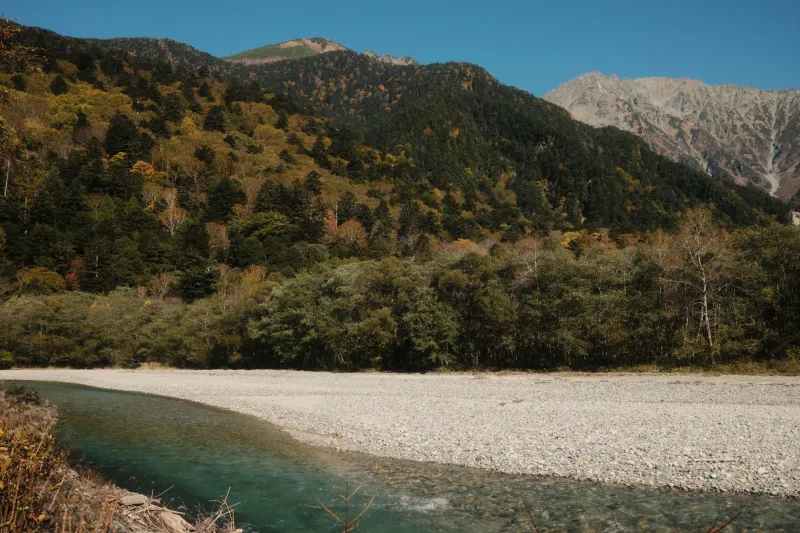
The Hirokawa approach trades steepness for distance. It's the route I recommend to first-time Japan hikers and to families with teenagers who've done some backpacking. The grade is gentler, the pace more forgiving, and you get more time inside the forest before the alpine world opens up.
Difficulty: Moderate, but long. Distance is its own challenge.
Time: 7–9 hours up depending on pace.
Exposure: Very little. Well-built trail throughout.
Best for: Families, first-timers, anyone acclimating to Japanese trail culture, hikers who want to actually enjoy the journey.
The tradeoff is time. You're committing most of a day, and many hikers solve this by staying overnight at a yamagoya (mountain hut) and summiting at dawn. Honestly? That's the best version of this route. Sunrise above the Japanese Alps from Ontake's summit is worth the hut fee twice over.
The Ladder Routes: Don't Fake It
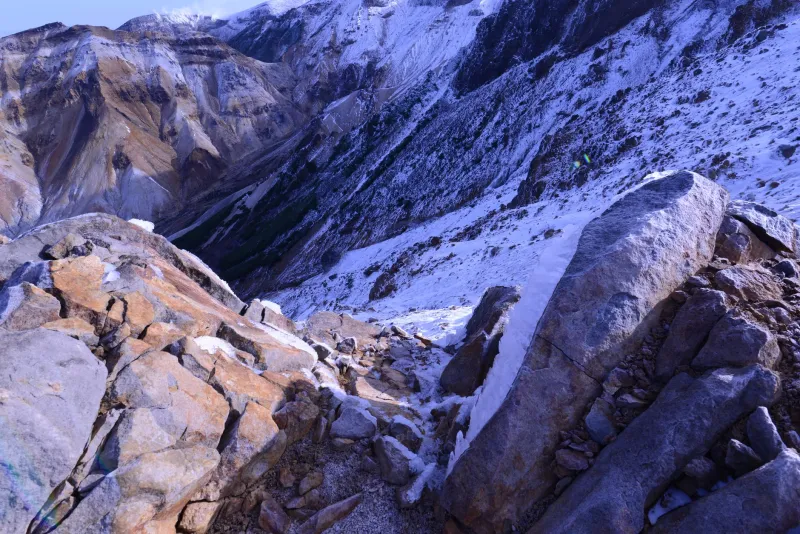
Above the Nyonindo area, certain lines involve ladders, chains, and genuinely exposed scrambling across volcanic terrain. This is where I need to be blunt with an American audience: this terrain is nothing like a Class 3 scramble in the Whites. Volcanic rock on Ontake can be loose, the exposure is real, and the consequences of a slip are severe.
Difficulty: Experienced alpinists only. No exceptions.
Best for: Hikers comfortable with via ferrata-style exposure, sure-footed on scree, and traveling light and fast.
If you're reading this and wondering whether you qualify — you don't yet. Take Kuzo or Hirokawa this trip, and come back. The mountain isn't going anywhere; it's been here longer than your country.
Permits and the Shrine Office
One thing that trips up US hikers: Ontake isn't a national park in the American sense. It's a sacred mountain administered through the shrine, and proper etiquette means registering at the Otake Shrine office before climbing — especially on the traditional routes. Think of it as a self-issue permit with a bow attached. The office staff can also give you current conditions, which matters more here than on most American peaks.
Quick Decision Guide
Still torn? Here's the cheat sheet:
- Traveling with kids or casual hikers? Hirokawa, with a hut overnight.
- Fit, short on days, want the classic? Kuzo, start at dawn.
- Experienced and exposure-hungry? The ladder routes — after checking conditions at the shrine office.
- Weather looks iffy? None of them. Read the sky, not your itinerary.
Pick the trail that matches who you actually are as a hiker, not who you'd like to be. Ontake rewards that honesty — and this mountain, of all mountains, notices the difference between showing up with respect and showing up with an ego.