When the Weather Wins: Rethinking a Rained-Out Kiso-Ontake Summit Day
Every hiker who's spent time in the mountains of Japan eventually meets the same truth: Kiso-Ontake doesn't negotiate. At 3,067 meters, this sacred volcano at the southern edge of the Japanese Alps has been a pilgrimage destination for centuries, and the old pilgrims understood something modern summit-chasers sometimes forget — sometimes the answer is not yet.
If you've flown ten hours from the US and booked a week of vacation around this climb, a forecast full of thunderheads can feel like a gut punch. But a rained-out summit day doesn't have to mean a ruined trip. In fact, some of the best Kiso-Ontake experiences happen below the clouds.
Reading the Forecast Like a Local
Japanese mountain weather forecasting is genuinely excellent, but the resources look different from what you're used to at home. Forget the generic weather apps — they're nearly useless in the mountains.
Start with tenki.jp, the Japan Weather Association's site. It has dedicated mountain forecasts (search for 御嶽山) that break down conditions by elevation. Yahoo Weather offers detailed hourly precipitation maps that are surprisingly accurate for the Kiso region. And if you can navigate even a little Japanese — or don't mind a translation app — the Japan Meteorological Agency (JMA) site publishes official weather warnings and advisories that locals take seriously.
A few things US hikers should know about reading these forecasts:
- Summer afternoons are the danger zone. The pattern in July and August is brutally consistent: clear mornings, building clouds by noon, thunderstorms by mid-afternoon. If the forecast shows a 60% afternoon precipitation chance, that's not hedging — that's a genuine lightning risk on an exposed volcanic cone.
- Watch for kaminari (thunderstorm) language. Japanese forecasts distinguish between steady rain and convective storms, and the distinction matters enormously above treeline.
- Check the day before, and the morning of. Mountain forecasts in Japan update frequently, and a 40% chance can become 90% overnight.
The golden rule on Kiso-Ontake, as on Rainier or Whitney: be off the exposed upper mountain by early afternoon, and if the morning looks ugly, don't start at all.
Turning Back Has Precedent Here
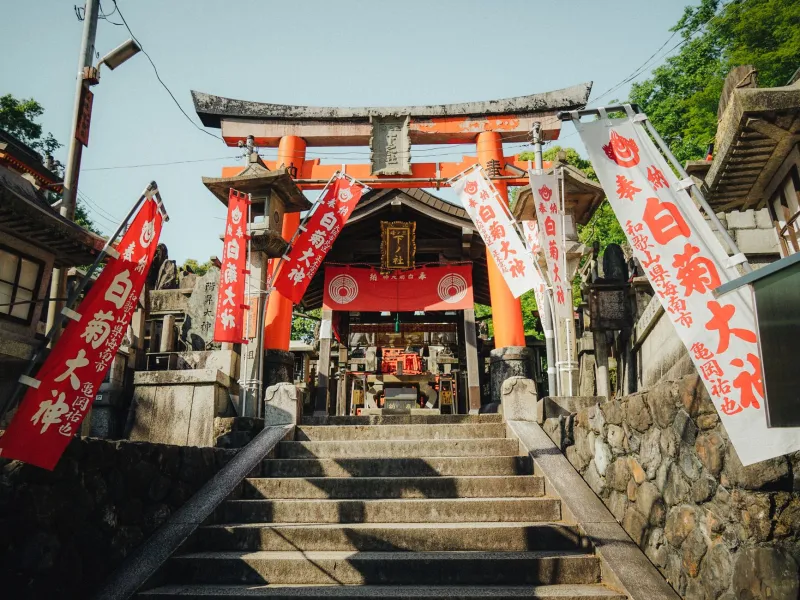
There's a cultural dimension to weather decisions on a sacred mountain, and it's worth sitting with. Kiso-Ontake has been a site of mountain worship (sangaku shinkō) for hundreds of years, centered on Otake Shrine. The pilgrims who climbed here historically weren't conquering anything — they were entering sacred territory, and entering it on the mountain's terms.
That mindset reframes a weather call. A whiteout or electrical storm isn't an obstacle to push through; it's the mountain saying come back another time. Pilgrims historically waited at the base for favorable conditions, sometimes for days. Modern hikers on a tight itinerary can't always wait, but they can adopt the same posture: the mountain will still be there, and so will you.
If you're on the trail when conditions turn — temperature drop, wind shift, that first distant rumble — descend promptly and don't look back. The summit will wait. Ridge rescues in the Japanese Alps are serious business, and you do not want to be the reason a local rescue team is out in the rain.
The Bad-Weather Backup Plan
Here's the good news: the Kiso-Ontake area is stacked with worthwhile low-elevation alternatives. Build these into your itinerary from the start, and a storm day becomes a different kind of day rather than a lost one.
Otaki village, the trailhead town. Most hikers blow through Otaki on their way to Kōdo trailhead, which is a mistake even in good weather. The village is the historic gateway to the sacred mountain, home to the Otake Shrine complex and a compact, atmospheric collection of pilgrim lodgings, craft shops, and soba restaurants. Spend a storm day here: visit the shrine office, browse the small museums covering the mountain's eruption history and spiritual traditions, and eat a long, unhurried lunch. It's the kind of town that rewards slowness.
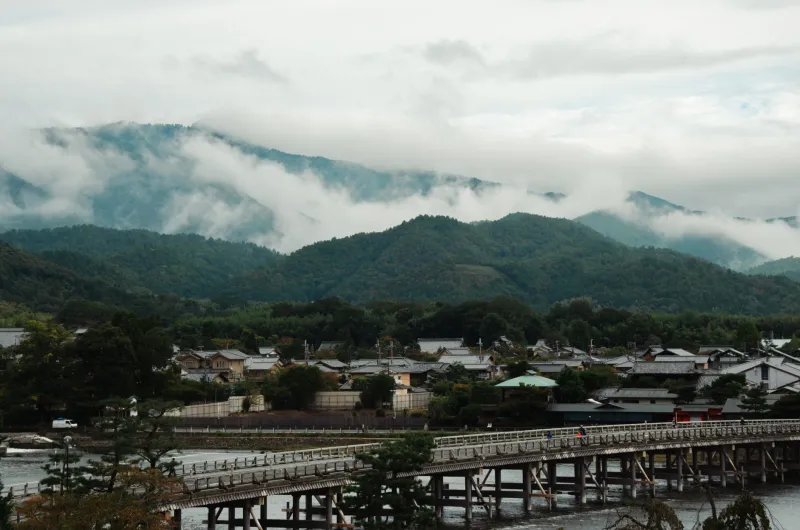
Kiso-Fukushima and the Kiso Valley. A short drive or train ride away, the Kiso Valley offers some of Japan's best preserved post towns along the old Nakasendō highway. Kiso-Fukushima has a delightful hilltop castle reconstruction, stone-lined streets, and riverside walking paths. On a drizzly day, walking the stone paths of Tsumugi-ya street under an umbrella is arguably better than hiking — misty, lantern-lit lanes feel like stepping into a woodblock print.
Onsen time. Rain and hot springs go together like — well, like rain and hot springs. The region has several bathhouses where you can soak through a storm window and emerge feeling like the weather did you a favor.
Indoor culture stops. The region's small museums — covering everything from lacquerware to the 1984 eruption of Ontake, which reshaped the mountain and its trails — offer genuine depth, not just time-killers.
Making the Call Before It's Made for You
The hardest part of weather planning is psychological. US hikers in particular tend to carry a summit-or-bust mentality that serves us poorly on a sacred mountain. Here's a framework:
- Set a go/no-go threshold the night before. Write it down. If morning precipitation probability exceeds X%, or the mountain forecast shows thunderstorm icons before 1 p.m., the answer is no — no matter how good the sky looks at 4 a.m.
- Build a weather buffer into your trip. If Kiso-Ontake is the centerpiece of your Japan itinerary, give yourself two possible summit windows. A single-shot schedule turns every forecast into a coin flip.
- Ask locals. The staff at your lodgings in Otaki have watched this mountain's moods for years. When they say tomorrow is bad, believe them.
- Reframe the day, not just the plan. A storm-day detour through the Kiso Valley isn't a consolation prize. Ask anyone who's walked a rain-quiet post town at dusk — some of Japan's most atmospheric moments require an umbrella.
The mountain has drawn pilgrims for centuries, and it has turned some of them away for just as long. Coming back down with your summit intact and a warm bowl of soba in front of you isn't failure. It's the beginning of a return trip — and Kiso-Ontake, like any mountain worth its myths, rewards those who come back.