The Mountain That Remembers: How Kiso-Ontake's 1984 Eruption Still Shapes Every Step You Take
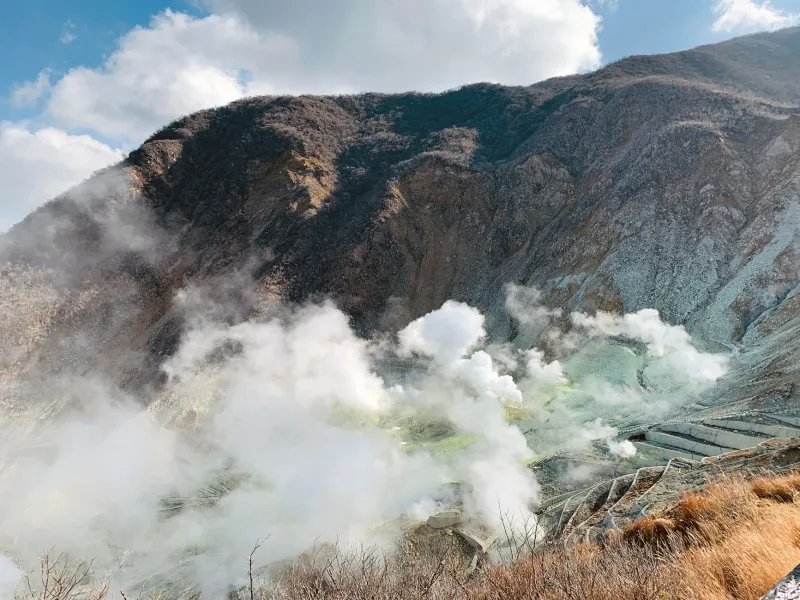
Stand at the summit of Kiso-Ontake and you're standing on fresh ground — geologically speaking, anyway. The rocky chaos around the peak isn't ancient. Much of it was rearranged within living memory, between 1979 and 1984, when this quiet sacred mountain reminded everyone below that it was still very much alive.
Most American visitors arrive thinking of Kiso-Ontake as a hiking destination with a side of shrine culture. Flip that around, and you'll get a lot more out of the trip. This is an active volcano that people have worshipped for centuries, and the eruptions of the early 1980s are the reason the mountain feels the way it does today: guarded, revered, and a little humbling.
What Actually Happened Up There
Starting in 1979, steam-driven eruptions — phreatic eruptions, if you want the technical term — began punching through the summit area. Unlike the lava-flow spectacles you might picture from Hawaii or Mount St. Helens, these blasts were mostly superheated steam, ash, and rock. No glowing rivers of magma. Just enough violence to blast apart the crater rim, shower the slopes in debris, and make the mountain unrecognizable in places.
The final major activity came in 1984, and the effects rippled outward in ways that had nothing to do with geology. Trails to the top were closed. Pilgrimage routes that had seen continuous use for hundreds of years went silent. For the communities of Otaki and Kiso villages at the mountain's base — places where the economy, identity, and faith all revolve around the peak — it was a genuine crisis.
Think about it this way: imagine if a beloved American landmark, say a cathedral or a national park icon, suddenly became dangerous to visit for years. Then imagine the town built around it trying to survive the wait. That's roughly the scale of what happened here.
A Faith Tested by Its Own Mountain
Here's the part that makes this story more than a geology lesson. Kiso-Ontake worship centers on the belief that the mountain itself is divine — that the peak is a god, not merely a place where gods live. So when the mountain erupted, the local faithful didn't respond by abandoning it. They responded by reinterpreting it.
Some saw the eruptions as a warning, a sign that the mountain demanded more reverence and less casual traffic. Others understood it as the deity flexing its power — proof, ironically, that the god was real and active. Shrine rituals adapted. Restrictions were accepted rather than resented. The mountain's authority was, in a strange way, reinforced by its violence.
This is a genuinely different framing than most Americans are used to. Back home, we tend to treat nature as scenery — something to be consumed, photographed, conquered. The Kiso-Ontake story suggests another relationship entirely: one where the mountain gets a vote.
The Mountain You'll Hike Is a Post-Eruption Mountain
When you climb Kiso-Ontake today, the 1979–84 activity is visible everywhere if you know to look. The jumbled, sulfur-stained terrain near the summit craters — the area around Ninoike and the inner crater — bears the scars plainly. Fumaroles still vent steam. The smell of rotten eggs near the highest reaches isn't a plumbing problem; it's the volcano breathing.
Certain zones near the summit remain off-limits or restricted depending on conditions, and this is not a suggestion to be negotiated with. The shrine office and local authorities adjust access based on volcanic activity levels, and ignoring posted barriers isn't just rude — on an active volcano, it can be genuinely dangerous.
Check the Alert Level Like You'd Check the Weather
Japan runs one of the world's best volcanic monitoring systems, and Kiso-Ontake is under constant watch by the Japan Meteorological Agency. Before your trip, check the current volcanic alert level (you can find it via the JMA website, which has English pages). Levels run from 1 to 5:
- Level 1: Active but quiet — normal access with usual caution
- Level 2: Restricted around the crater — summit zones may close
- Level 3 and above: Widespread closures; don't plan on climbing
Make this check part of your pre-trip routine, right alongside booking your mountain hut and confirming bus schedules. Alert levels can change with little warning, so glance at it again the week you depart.
Why This History Makes the Hike Better
It would be easy to read all this as a list of hassles: restricted zones, alert levels, sulfur fumes. But honestly? The eruption history is what elevates this climb above a typical summit-bag.
When you walk a trail that was closed for years, then reopened by people who never stopped believing the mountain was worth worshiping, you're participating in something. When you pass a fumarole and realize you're walking on a living system — not a monument, not a theme park, but a god with a temper, in the local understanding — the hike stops being exercise and starts being encounter.
A few practical takeaways to carry with you:
- Respect every rope barrier and closure sign, even when the restricted area looks harmless
- Stop by the Otake Shrine office in Otaki before your climb — it's the traditional way, and the staff can share current conditions
- If you smell strong sulfur or notice unusual steam, turn back and report it
- Read a little about the 1984 eruption before you go; the trail signs will mean more
The mountain has been climbing-worthy for centuries and eruptive for just as long. Both facts are true at once, and the locals have made peace with that tension. As a visitor, the most respectful thing you can do is make peace with it too — and let it change how you see not just this peak, but every wild place you walk through afterward.