Reading the Light: A Photographer's Field Guide to Kiso-Ontake, From Otaki Fog to Summit Alpenglow
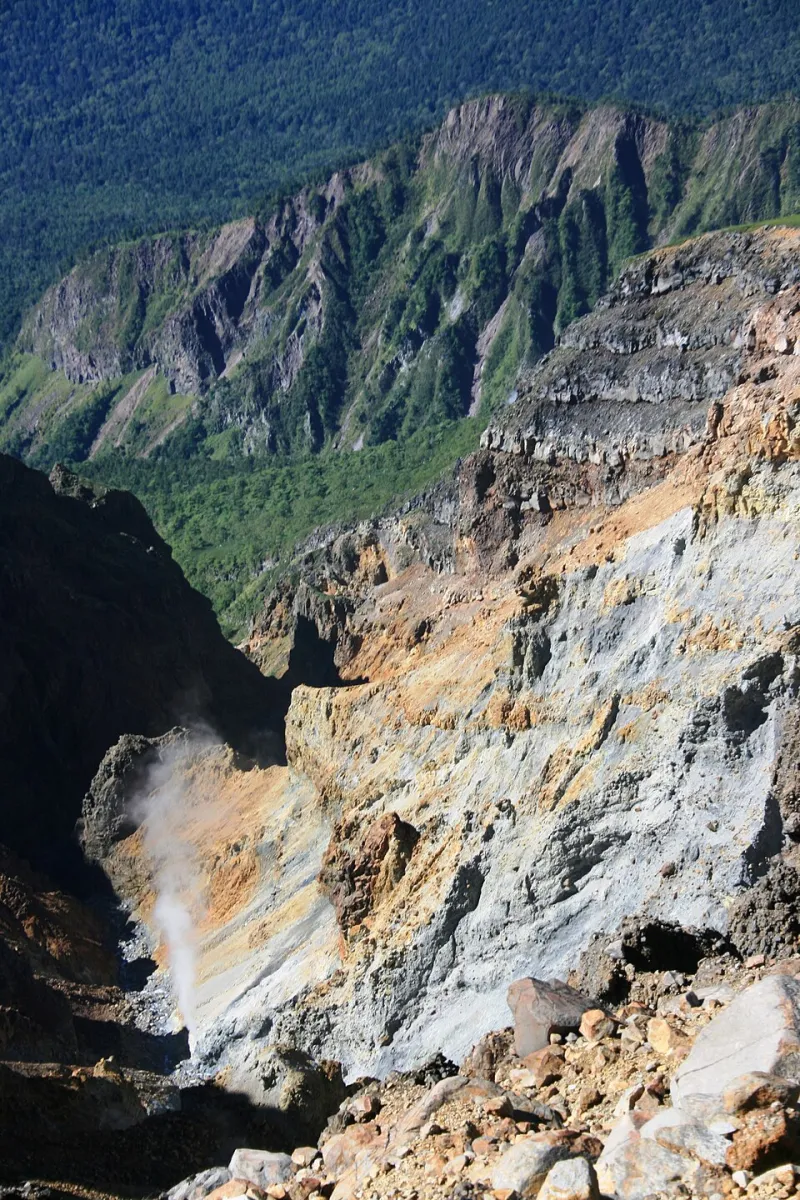
Photo: Alpsdake, CC BY-SA 3.0, via Wikimedia Commons
Most hikers pick a mountain for its trail. Photographers pick it for its light. And Kiso-Ontake, the sacred stratovolcano straddling Nagano and Gifu prefectures, delivers light unlike anywhere else in the Japanese Alps — volcanic steam drifting across shrine gates, larch forests that ignite gold in October, and a summit rim that catches the first sunrise in the country before the valleys below have even woken up.
This isn't a gear-review listicle. It's a working schedule: where the light lands, when it lands there, and how to be standing in the right place when it does.
Start in the Basin: The Otaki Morning Fog Play
The village of Otaki sits in a bowl at the mountain's base, and on cool mornings — especially late September through November — a river of fog pools there before sunrise. Get up at 4:30, walk ten minutes uphill from wherever you're staying, and watch the village rooftops emerge from the mist one by one as the sun crests the eastern ridge.
The shot you're after: the torii gates and shrine rooftops of Otaki floating in white, with the volcanic cone ghosted in behind them. A telephoto in the 100–200mm range compresses the layers beautifully. Bring a tripod; you'll be shooting at ISO 400 or lower in near-darkness for twenty minutes before the color arrives.
American photographers who've shot fog inversions in the Smokies or Yosemite's Tunnel View at dawn will recognize the rhythm. The difference is the subject matter — here it's a 700-year-old pilgrimage village, not granite domes.
Golden Hour, Twice a Day
Because Kiso-Ontake's summit faces east over the Southern Alps, alpenglow hits the crater rim hard. If you've overnighted at a mountain hut (the Sanroku and summit-area huts are basic but functional), set an alarm for 45 minutes before sunrise. The rim turns rose-orange for maybe fifteen minutes, and steam from the fumaroles catches the color — a combination you simply can't fake.
Evening delivers the mirror image: the sun drops behind the ridgeline to the west and the entire Kiso Valley below turns amber. Wide-angle work works here, especially if you include a hiker or a small stone shrine on the rim for scale.
Respecting the Frame: Shooting Rituals at Otake Shrine
Here's where photography on this mountain demands more care than on your average national park trail. Kiso-Ontake is an active site of Shinto mountain worship. The fire rituals (goma) held at the shrine and on the slopes are religious ceremonies, not performances.
The etiquette is simple and non-negotiable:
- Ask first, always. Speak to the shrine office staff before pointing a lens at any ceremony. A polite "shashin, daijoubu desu ka?" (is photography okay?) goes a long way.
- Never block the path of worshippers or priests. If you're asked to move, move.
- No flash, no drone, no stepping onto ritual spaces to get a better angle.
- Some rituals prohibit photography entirely. Accept that gracefully — some images belong to memory only.
Think of it this way: you wouldn't walk into a church in Santa Fe and start staging shots during mass. Same instinct applies here, just with more incense.
Protecting Gear From Ash, Steam, and Weather
Volcanic terrain is quietly hostile to cameras. The fine ash on the upper slopes gets into everything — zoom rings, sensor chambers, lens barrels. A few field habits help:
- Change lenses inside your pack or a sheltered spot, never on the rim where ash is airborne.
- Carry a blower brush; wipe down gear each evening at the hut.
- The steam vents are acidic and humid. Keep your camera bag closed when passing fumaroles, and don't leave glass exposed on the summit overnight.
- Pack a rain cover even in bluebird forecasts. Mountain weather here changes on a dime, and October can deliver sleet by mid-afternoon.
Batteries die faster at altitude in cold months — carry spares in an inside pocket close to your body. If you've shot winter in the Rockies, you know the drill.
A Season-by-Season Light Calendar
Spring (May–June): Lingering snow patches against black volcanic rock create high-contrast compositions. The light is clean and the crowds are thin.
Summer (July–August): The official climbing season. Best light is dawn and dusk; midday is hazy and flat. Afternoon thunderstorms, though a hazard, produce the most dramatic skies of the year.
Autumn (October): The headline season. Larch groves turn pure gold on the lower slopes, and the low sun angle keeps contrast rich all day. This is the month to book.
Early winter (November): Rime ice and the first snows, for the hardy and properly equipped only.
The Last Frame
Every photographer who visits this mountain comes home with the same realization: the best image of Kiso-Ontake is rarely the summit panorama. It's the small moment — steam curling past a weathered stone marker, a pilgrim's silhouette on the ridge, fog swallowing the village at dawn. Chase the light, but let the mountain's spirit stay in the frame. It was there long before your lens arrived, and it'll be there long after.