Skip the Camino Crowds: The Case for Japan's Most Underrated Sacred Summit
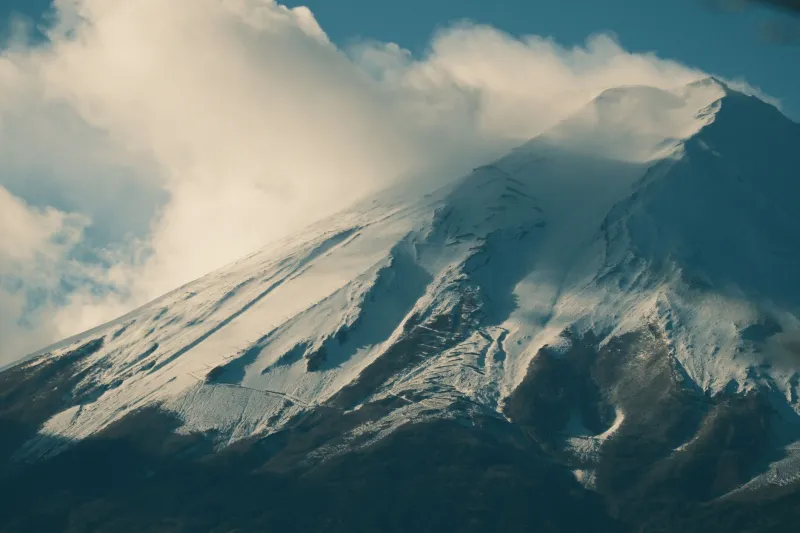
Ask an American hiker about pilgrimage treks and you'll hear the same shortlist: the Camino de Santiago, maybe Kilimanjaro, if the budget allows. Meanwhile, one of the oldest continuously worshiped mountains on Earth — a volcano with two millennia of devotion behind it, standing taller than anything in the lower 48 — gets barely a footnote in English-language guidebooks.
That mountain is Kiso-Ontake, straddling Nagano and Gifu prefectures in central Japan. And I'd argue it's the best sacred summit hike you've never considered.
Two Thousand Years of Walking Up
Kiso-Ontake isn't a mountain with a shrine on it. It's a mountain that is the shrine.
Worship here stretches back roughly two millennia, with formal pilgrimage organizations — called ontake shinkō — flourishing from the 1700s onward. Farmers, merchants, and mystics climbed in white-robed groups, led by ascetic guides, to commune with spirits believed to dwell in the crater's inner peaks. Stone markers, small shrines, and carved offerings still line the trails like breadcrumbs left by centuries of pilgrims.
Compare that to the Camino, whose modern revival is barely 40 years old. On Ontake, you're not recreating an ancient route. You're continuing one.
The Accessibility Argument
Here's the part that should sell every time-strapped American: you can be standing on sacred summit terrain within a day of landing in Japan.
Nagoya's international airport sits a couple of hours away. A ropeway on the Otaki side shaves hours off the approach, meaning a reasonably fit traveler can reach the high crater rim — at 2,900-plus meters, above the altitude of anything in Colorado — without a mountaineering résumé. Try that on Kilimanjaro, where the permit alone costs more than a week in the Kiso Valley.
The trade-off? You trade ego for intimacy. There are no crowds here, no finisher's certificates. Just wind, stone, and a very old quiet.
The Eruption That Changed Everything
You can't write honestly about Ontake without mentioning September 27, 2014.
Without warning, the volcano erupted near the summit, claiming 58 lives — the deadliest volcanic disaster in postwar Japan. Hikers died where pilgrims had prayed for centuries. The mountain's alert level rose, monitoring tightened, and some areas remain off-limits when activity shifts.
I tell you this not to scare you off, but because it reframes the climb. Ontake is not a theme park of spirituality. It's a living, breathing geological force that people have chosen to walk up for two thousand years, fully aware of the risk. The 2014 eruption is part of that story now — and hiking here afterward is, for many Japanese climbers, an act of remembrance as much as recreation.
Check the Japan Meteorological Agency's current alert level before you go. Level changes happen, and they're not negotiable.
How to Be a Good Guest on a Holy Mountain
Western hikers sometimes treat sacred peaks as scenic backdrops. On Ontake, you'll stand out less if you lean into the local norms:
Bow at the shrines. Small torii gates and stone altars dot the route. A brief bow or clap costs nothing and means everything.
Leave offerings properly. Coins at shrines, yes. Random cairns or graffiti-style rock stacks, no — the crater zone's stone arrangements follow pilgrimage tradition, and adding your own can be seen as disrespectful.
Keep your voice down near worship sites. Groups of Japanese pilgrims may be chanting or praying. You're hiking through their sanctuary, not the other way around.
Follow closures absolutely. Restricted zones protect both the mountain's sacred core and, frankly, your life.
Hire a local guide if you can. Pilgrim guides still operate out of Otaki and Kiso-Fukushima, and their knowledge of the mountain's lore — the founding legends, the ascetic practices, the meaning of each peak — transforms a hike into something closer to what the original climbers experienced.
Why It Belongs on Your List
There's a moment near the crater rim on Ontake, usually just after dawn, when the clouds fill the caldera below and the small shrines around you catch the first light. Pilgrims have stood in that exact spot for centuries, bowing to peaks they believe house the gods.
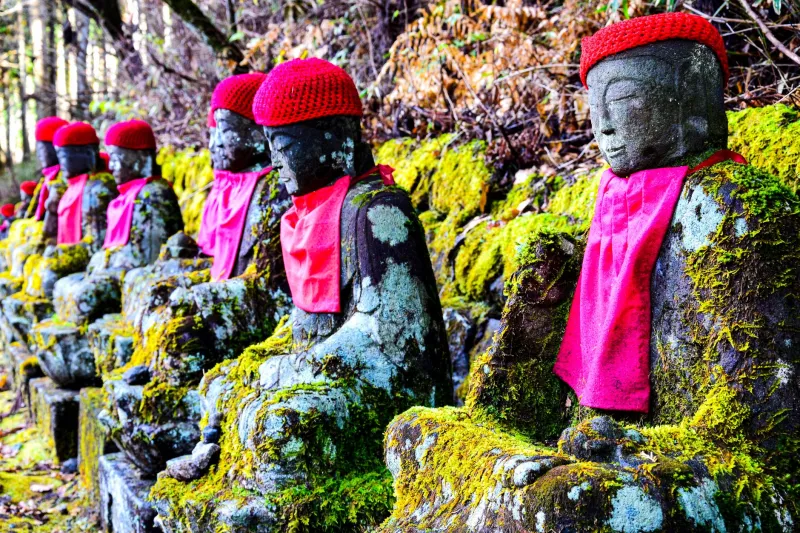
You can hike it in a day trip. You can be back in an onsen by evening. And unlike the trails everyone's posting about, you'll likely share it with more stone Buddhas than people.
The Camino will always be there. Kilimanjaro isn't going anywhere. But a sacred volcano that most of the hiking world has overlooked — that's the kind of trail worth finding before everyone else does.